

How Companies Choose the Right Office Space in the Era of Hybrid Work
29.10.2026The way companies organize their operations has changed significantly with the adoption of hybrid working models. Having all employees present at the office every day is no longer a universal practice, and this shift directly influences how workplaces are evaluated and used.
For organizations exploring available office spaces for rent, the challenge is no longer simply to find enough space to accommodate the entire workforce. It is important for the future office to reflect actual usage patterns, provide flexibility and support collaboration between teams.
Choosing the right amount of space can help optimize operating costs without compromising employee comfort or operational efficiency.
Analyze Actual Office Attendance
The first step in determining office space requirements is to assess how many employees actually work from the office on different days of the week.
For example, in a company with 100 employees, it is not necessarily the case that all 100 workstations will be occupied simultaneously. However, reducing office space based solely on average attendance can create problems on busier days.
It is advisable to analyze both average occupancy levels and periods when most teams are present. Department meetings, client visits and activities requiring collaboration can temporarily increase demand for certain areas.
A realistic assessment should take these variations into account rather than relying exclusively on the total number of employees.
Hybrid Work Changes Office Layout Requirements
In a traditional office model, each employee may have a permanently assigned desk. In a hybrid environment, companies can introduce shared workstations that are used according to actual attendance.
This approach, known as desk sharing, allows more efficient use of floor space but requires clear policies and careful organization.
For example, a desk booking system can help employees identify available workstations before arriving at the office. At the same time, sufficient storage space for personal belongings and suitable areas for individual work should be provided.
The objective is not to reduce the number of desks at any cost, but to create a working environment that functions efficiently despite fluctuations in attendance.
Collaboration Areas Are Becoming Increasingly Important
In many organizations, days spent at the office are dedicated to meetings, exchanging ideas and activities that benefit from face-to-face interaction.
For this reason, office layouts should include more than simply arranging individual workstations.
Meeting rooms, informal discussion areas and dedicated project spaces can play an important role in supporting collaboration.
However, maintaining the right balance is essential. Allocating too much space to meetings can reduce the availability of areas intended for tasks requiring concentration.
Before making a decision about office leasing, it is useful to identify the types of activities employees perform and the balance between individual and collaborative work.
Do Not Overlook the Need for Focus and Privacy
An office adapted to hybrid work should not consist exclusively of open-plan areas designed for constant interaction.
Employees also need quiet spaces for tasks requiring concentration, telephone calls and confidential discussions.
Video call booths, small meeting rooms and individual work areas can help reduce noise and improve the overall working experience.
For companies handling sensitive information, such as those operating in finance, legal services or consulting, the availability and organization of these areas may become essential selection criteria.
An efficient layout should allow several types of activities to take place simultaneously without significant disruption.
Usable Floor Area and Layout Efficiency Matter
Two properties with similar floor areas may offer very different layout possibilities. Floor plate shape, column positioning, access to natural light and the location of building services can influence how many workstations can be accommodated efficiently.
When comparing different office spaces for rent, it is important to review floor plans and understand the difference between the rentable area and the space that can actually be used.
A larger office is not necessarily more efficient if a significant portion of its floor area is difficult to furnish or configure.
Simulating the placement of workstations, meeting rooms and common areas can help identify a suitable layout before signing a lease agreement.
Lease Flexibility Can Support Business Growth
Office space requirements may change as teams develop, working policies evolve or business operations expand.
Therefore, during the office leasing process, it is advisable to consider not only the space currently available but also the possibilities for medium-term adaptation.
Depending on the property and lease conditions, there may be opportunities to expand, reorganize or adjust the occupied space.
A building that supports flexible layouts can be an advantage for companies anticipating changes in their organizational structure.
At the same time, it is important to assess the costs associated with potential modifications to ensure that flexibility is both practical and financially sustainable.
Costs Should Reflect How the Office Is Used
Reducing office space may generate savings, but making a decision based exclusively on monthly rent can lead to operational compromises.
In addition to rent, companies should consider service charges, utilities, fit-out costs, furniture and the technological infrastructure required to support hybrid work.
Desk booking systems, video conferencing equipment and connectivity solutions may involve additional investment.
It is useful to compare the total cost of occupancy with the benefits provided to employees and the efficiency of space utilization.
A well-organized office can support productivity and collaboration even if it is not the lowest-cost option per square meter.
Choose an Office That Adapts to Your Working Model
Hybrid work does not automatically mean reducing office space. Instead, it requires a more thoughtful and flexible approach to how that space is used.
Every company has its own requirements, shaped by team size, the nature of its operations and the frequency of office attendance. For this reason, there is no universal formula for calculating the ideal office area.
Before selecting from the available office spaces for rent, it is advisable to assess occupancy levels, collaboration requirements, technological needs and future growth plans.
A well-informed decision can help control costs, improve the employee experience and create a professional environment capable of adapting to future changes.


Latest posts
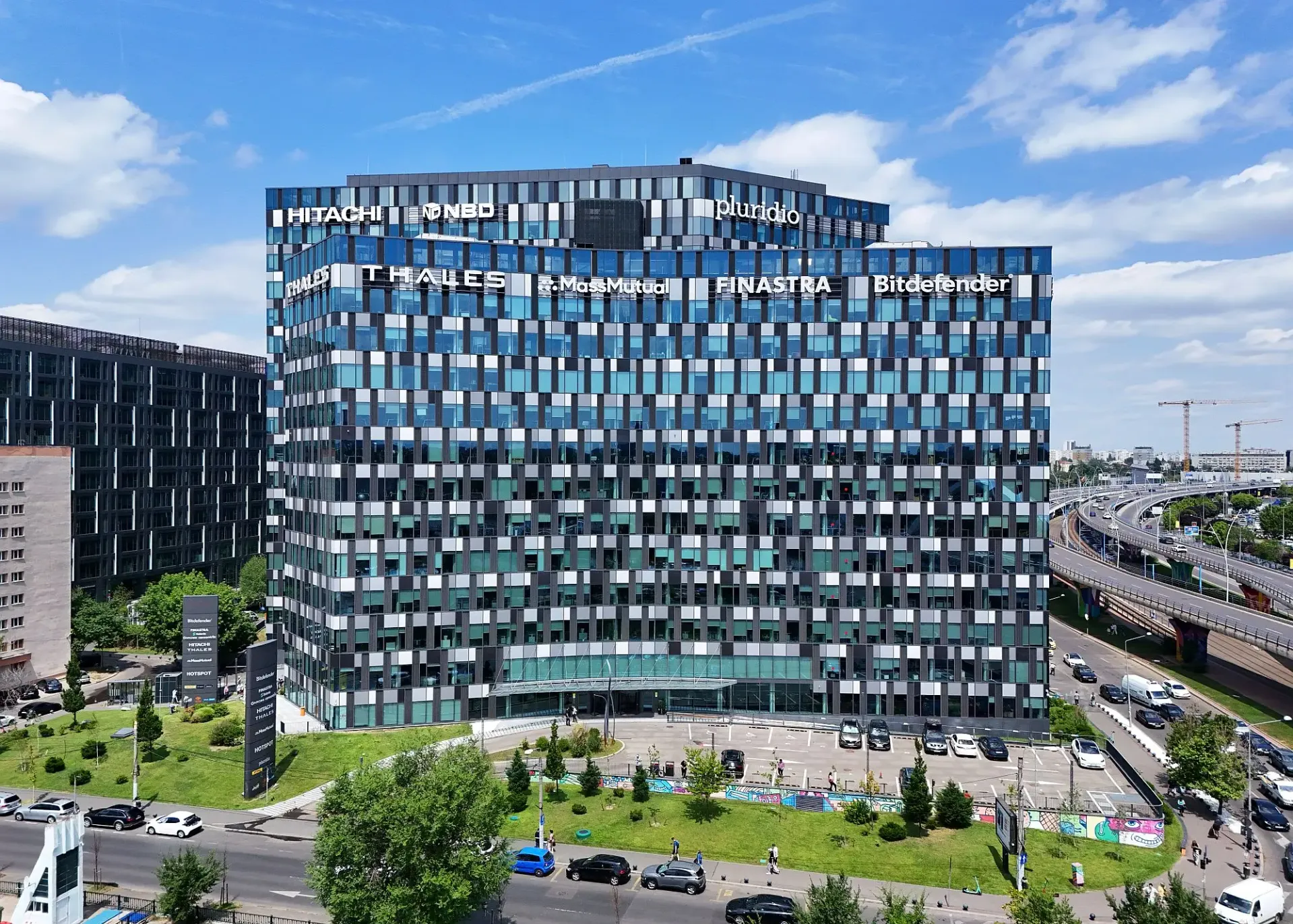
Explore the advantages of a central headquarters and multiple office locations, considering costs, accessibility and team requirements.
Read more
The office influences how the team works, the employee experience, the company’s image, and operating costs.
Read more
These are important criteria, but there is another cost that is more difficult to capture in an Excel spreadsheet: the time and effort employees need to get to the office.
Read more
A recent quarterly survey of more than 10,000 technology professionals, published by the Future Forum, found that globally only one in three employees still actually work full-time at the office.
Read more